CQC Notifications: What Registered Managers Must Report, Which Route to Use and When
By Kizito Chukwude

A CQC notification is not the investigation. It is the formal alert that a specified event has happened. The safest management habit is to recognise the trigger quickly, notify on the facts available and keep a clean evidence trail while the investigation continues.
This guide is written for registered managers and nominated individuals in domiciliary care. It turns the notification hub into a practical decision process; it does not replace the wording of the regulations or the current CQC form.
The 60-second notification test
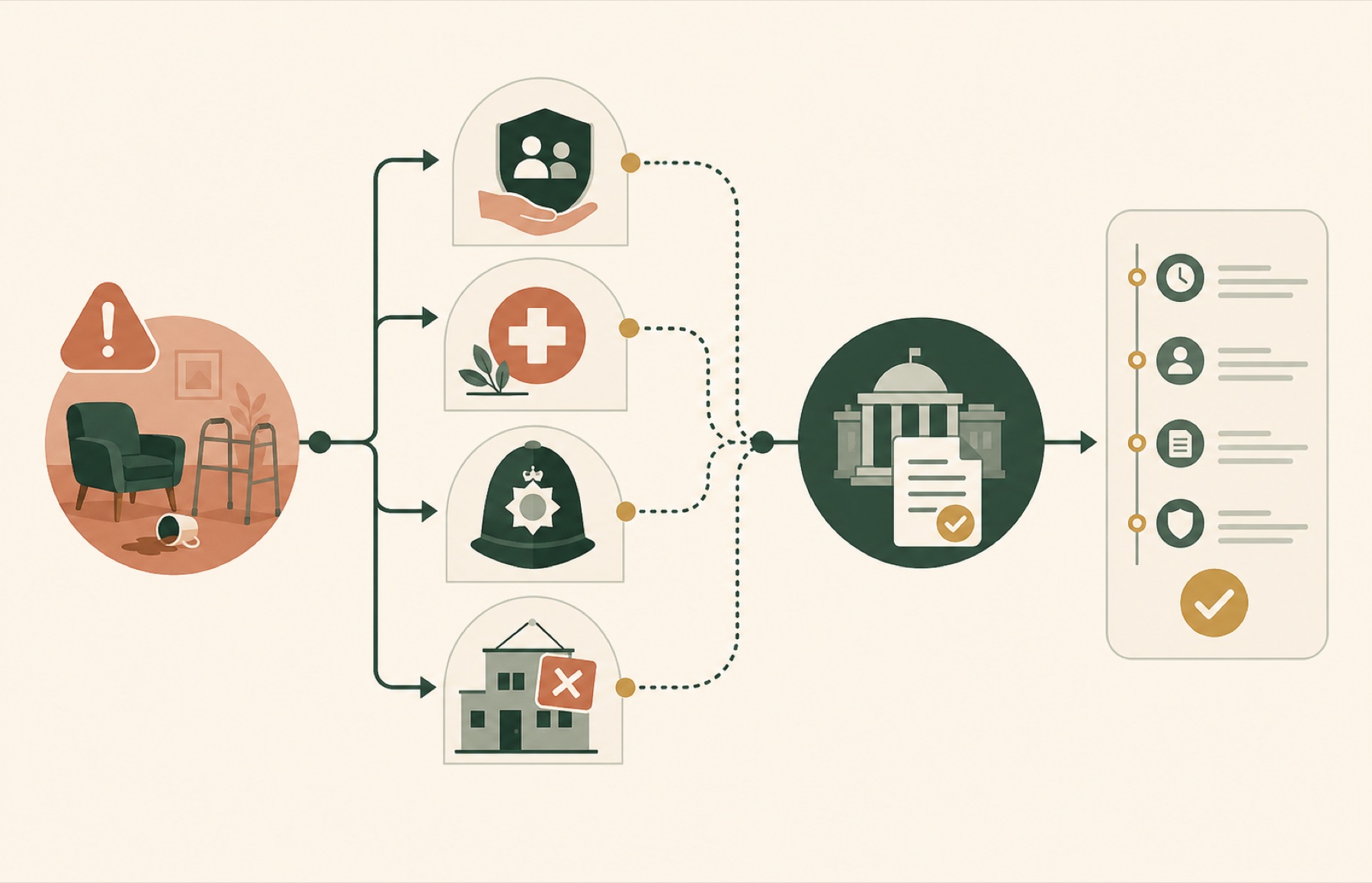
Events a homecare manager should recognise
| Event | Manager's first question | Evidence to retain |
|---|---|---|
| Death of a person using the service | Did it occur while care was being provided, and which current death notification applies? | Facts, time, people informed, expected/unexpected status and submission receipt. |
| Serious injury | Does the nature or outcome meet CQC's current serious-injury trigger? | Body map or clinical information where appropriate, immediate action, care-plan review and learning. |
| Abuse or allegation of abuse | Is the person safe, has the local safeguarding route been used, and is CQC notification required? | Protection action, referral reference, chronology and confidentiality controls. |
| Police involvement | Does the incident involving a person using the service fall within the notification requirement? | Police reference, factual account and related safeguarding or incident records. |
| Service disruption | Did the disruption prevent or threaten safe delivery of the regulated activity? | Continuity actions, affected visits, commissioner contact and recovery review. |
| Registered-person absence or change | Is this a notifiable absence of 28 days or more, return, or a change to registered details? | Dates, interim management arrangements, notice and acknowledgement. |
Do not collapse five duties into one
A medication error, fall or missed visit can create more than one route: internal incident management, safeguarding referral, CQC notification, commissioner reporting, duty of candour, police contact or a health-and-safety report. Sending one does not automatically satisfy the others.
Use a short escalation matrix that names the decision-maker, deputy and out-of-hours route. Include a column for decision and rationale; a defensible “not notifiable because…” record is stronger than silence.
Practical next step Turn the incident into an accountable record Create a personalised accident and incident record, then connect actions, review dates and learning. Build an incident record →What a strong notification file contains
- A factual chronology: what was known, by whom and at what time.
- Immediate protection: clinical help, staffing changes, safeguarding measures or continuity action.
- The notification decision: the event category, route used and person authorising it.
- Proof of submission: confirmation email, reference or saved copy.
- Linked duties: safeguarding, candour, commissioner, police or other references.
- Closure and learning: root cause, care-plan changes, staff briefing, policy change and effectiveness check.
Common mistakes
Notify the event on known facts when the trigger is met; investigation can continue.
Separate observation, allegation, clinical opinion and management finding.
Notification decisions cannot stop because the registered manager is on leave.
CQC may ask what changed, not merely whether a form was sent.
Frequently asked questions
Who is responsible for sending a CQC notification?
The registered person remains accountable. A deputy can support administration, but roles, authorisation and oversight should be explicit.
Should we wait for the investigation?
Not solely to obtain a final conclusion. Submit the required notification using accurate known facts, avoid speculation and retain later findings in the linked file.
Is our incident form enough?
No. It is supporting evidence, not a substitute for the required regulator route or other external reports.
Manager assurance Make notification readiness visible Use CareDocPro to organise incident, candour, absence and governance documents around one consistent agency record. Explore CareDocPro →Sources and further reading
- CQC: Notifications guidance hub (updated 25 March 2026)
- CQC: Regulation 15: notice of changes
- CQC: Changes to a registered manager or their activity
Guidance can change. Check the linked regulator page before acting on a live case.