How Often Should Care Staff Receive Supervision and Spot Checks?
By Kizito Chukwude

There is no honest universal answer such as “every three months” for every worker. The defensible answer is: often enough for this person, role and risk, and no less often than your policy promises.
Regulation 18 expects staff to receive appropriate support, training, professional development, supervision and appraisal as necessary. NICE says homecare workers should have practice-based supervision from someone experienced in homecare. Neither principle is met by collecting signatures on a calendar.
Separate the four controls
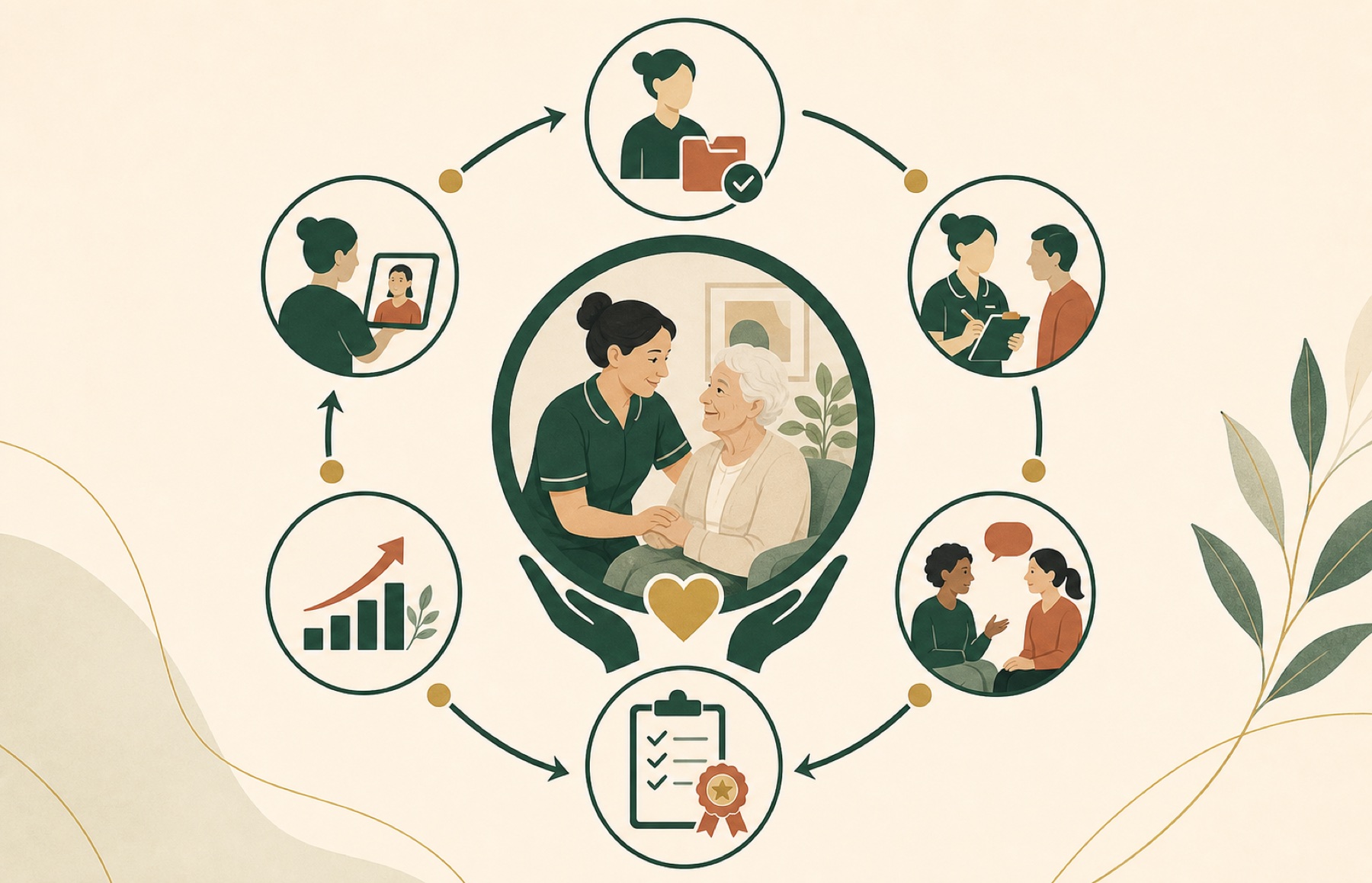
Private reflective discussion about practice, wellbeing, concerns, conduct, learning and actions.
Observed practice in context: timekeeping, dignity, infection control, records and plan delivery.
Decision that a worker can perform a specific task safely, with reassessment after change or concern.
Broader periodic review of performance, contribution, development and goals.
Set frequency by risk
| Trigger | Management response |
|---|---|
| New starter or probation | More frequent contact, observed practice and early feedback. |
| New task or complex package | Competency verification and follow-up in real delivery. |
| Incident, complaint or record concern | Prompt review, fair investigation, support and targeted reassessment. |
| Long gap, health change or returning worker | Check readiness, adjustments, refresher and observation. |
| Stable experienced worker | Maintain policy rhythm; use outcomes and feedback to adjust. |
Write a baseline interval in policy only if you can deliver it. Then list triggers for additional supervision. A dashboard should flag overdue sessions, but leaders should also see unresolved actions and workers needing higher support.
People management Create a supervision record with real follow-through Generate an agency-specific supervision record, capture agreed actions and schedule the effectiveness review. Build a supervision record →What good evidence contains

- Date, participants, role and private setting.
- Worker wellbeing, workload and safe-working issues.
- People's feedback, records, incidents and observed practice.
- Safeguarding, medicines and speaking-up prompts relevant to the role.
- Strengths, gaps, support and specific agreed actions.
- Sign-off or recorded disagreement, deadline and follow-up outcome.
Common mistakes
Every form says “no concerns”; managers backdate batches before inspection; spot checks are announced and observe only uniform; actions disappear into the next form; or training attendance is treated as competence. Sample quality as well as completion.
Frequently asked questions
Does CQC set one frequency?
No single interval fits every worker. CQC can assess whether support and supervision are appropriate and whether your own system is implemented.
Is a spot check supervision?
No. It is observation evidence that should inform supervision and competence decisions.
Can group supervision replace one-to-one?
Group sessions add shared learning, but sensitive individual matters need private discussion and accountable follow-up.
Workforce assurance Move beyond tick-box supervision CareDocPro helps you create a consistent record; your managers add the judgement, conversation and evidence of changed practice. Start free →Sources and further reading
Guidance can change. Check the linked regulator page before acting on a live case.