Care Plan Audit Checklist: What CQC Finds When Records Are Out of Date
By Kizito Chukwude

An “annual review completed” box does not prove the plan is current. A strong audit asks whether the person, worker and on-call manager could use this record today to deliver safe, individual care.
In a June 2026 domiciliary-care enforcement case, CQC reported care plans that had not been updated and lacked guidance about some health conditions. The practical lesson is not simply to review more often; it is to close the loop from change to instruction to delivery.
The eight-part audit

| Area | Audit question | Red flag |
|---|---|---|
| Identity and preferences | Does this sound like the person and reflect communication, culture and routines? | Generic phrases copied across records. |
| Consent and capacity | Is consent specific and is decision-specific capacity addressed where relevant? | A blanket “lacks capacity” statement. |
| Needs and risks | Do assessments, controls and visit instructions agree? | Recent fall or admission absent from the plan. |
| Medicines | Are support level, instructions and current records consistent? | Old medicine list or unclear prompting/administering role. |
| Outcomes | Are goals meaningful, observable and reviewed with the person? | Only task completion, no desired outcome. |
| Visit delivery | Could a competent unfamiliar worker follow the plan safely? | Contradictory timing or equipment instructions. |
| Contacts and escalation | Are contacts, professionals and contingency routes current? | Disconnected numbers or no deterioration plan. |
| Review trail | Does it show involvement, decisions, changes and staff briefing? | Signature with no evidence of what was reviewed. |
Test the closed loop
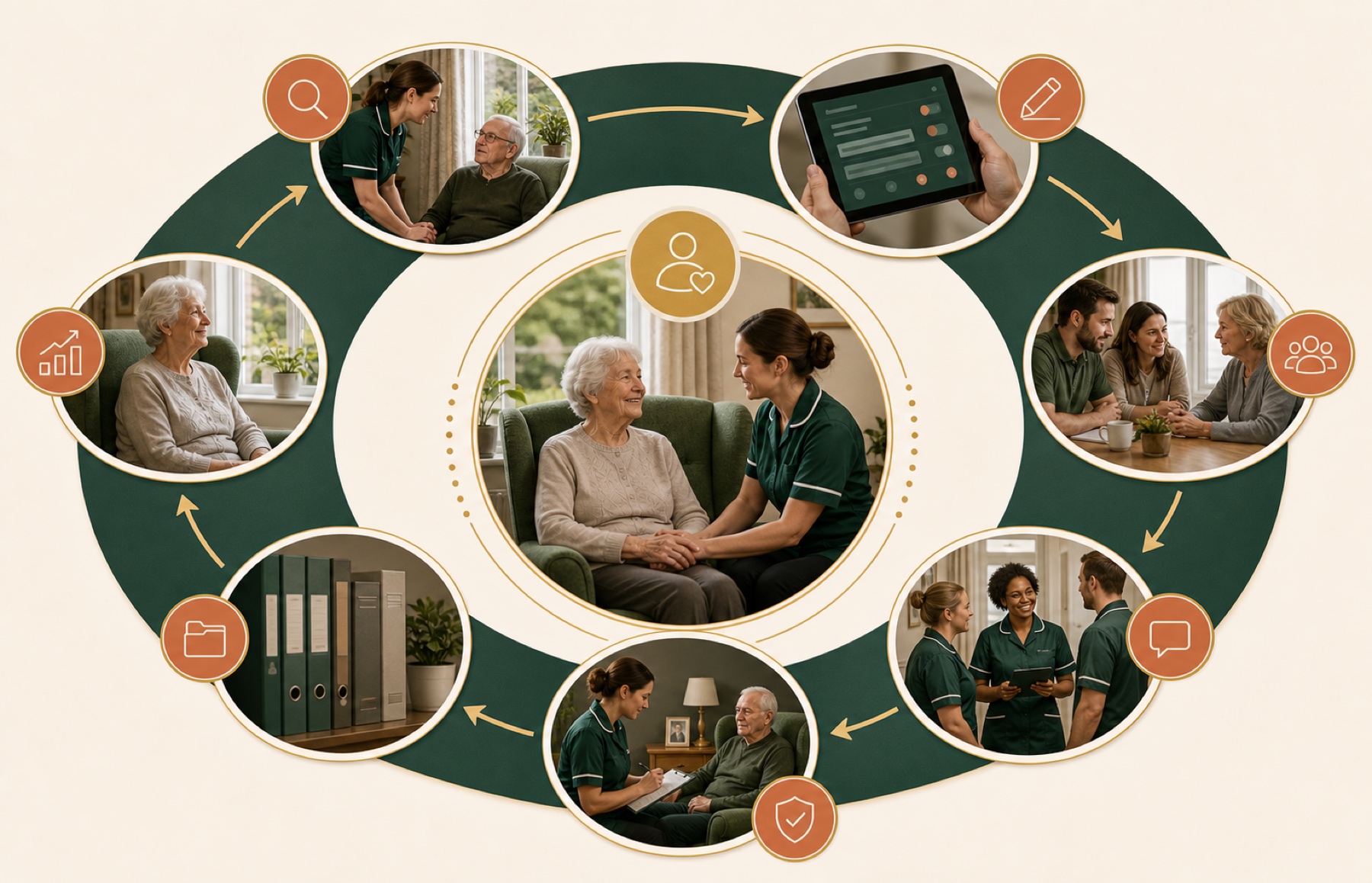
- Change recognised: worker, person, family or professional identifies new information.
- Risk considered: urgent action is taken before routine paperwork.
- Person involved: preferences, consent and accessible communication are recorded.
- Controlled update: linked assessments and instructions change together.
- Team briefed: relevant workers receive and understand the change.
- Delivery checked: spot check, call, record sample or outcome confirms it worked.
Choose the sample intelligently
Random sampling is useful, but add risk-based cases: new starts, hospital discharge, recent falls, medicine change, complaint, missed visit, safeguarding, complex communication, deteriorating health and plans owned by different coordinators. If two records share the same defect, expand the sample and test the process.
Score for action, not vanity
Protect the person now and escalate.
Correct promptly, find cause and expand sample.
Current, coherent and evidenced in delivery.
Report themes by type, owner, location and recurrence. “92% compliant” is not reassuring if the missing 8% concerns medicines or moving-and-handling instructions.
Frequently asked questions
How often should care plans be reviewed?
Use need, risk and change triggers plus your planned policy interval. Review immediately when information materially changes.
What makes a plan out of date?
Content that no longer matches the person's current needs, choices, risks, medicines, contacts or delivered practice, even if the review date looks recent.
How many should we audit?
Use a representative and risk-weighted sample, record your rationale and expand it when a pattern appears.
Close the loop Make the next care-plan review easier to defend CareDocPro gives you a consistent personalised starting point; your assessment, involvement and live evidence make it safe. Start your first document →Sources and further reading
- CQC: Regulation 9: person-centred care
- CQC: Regulation 17: good governance
- CQC: Domiciliary care enforcement example, June 2026
Guidance can change. Check the linked regulator page before acting on a live case.